America at 250: What the Founders knew about getting people to say yes
Seven keys to leadership, influence, and change from the birth of the United States
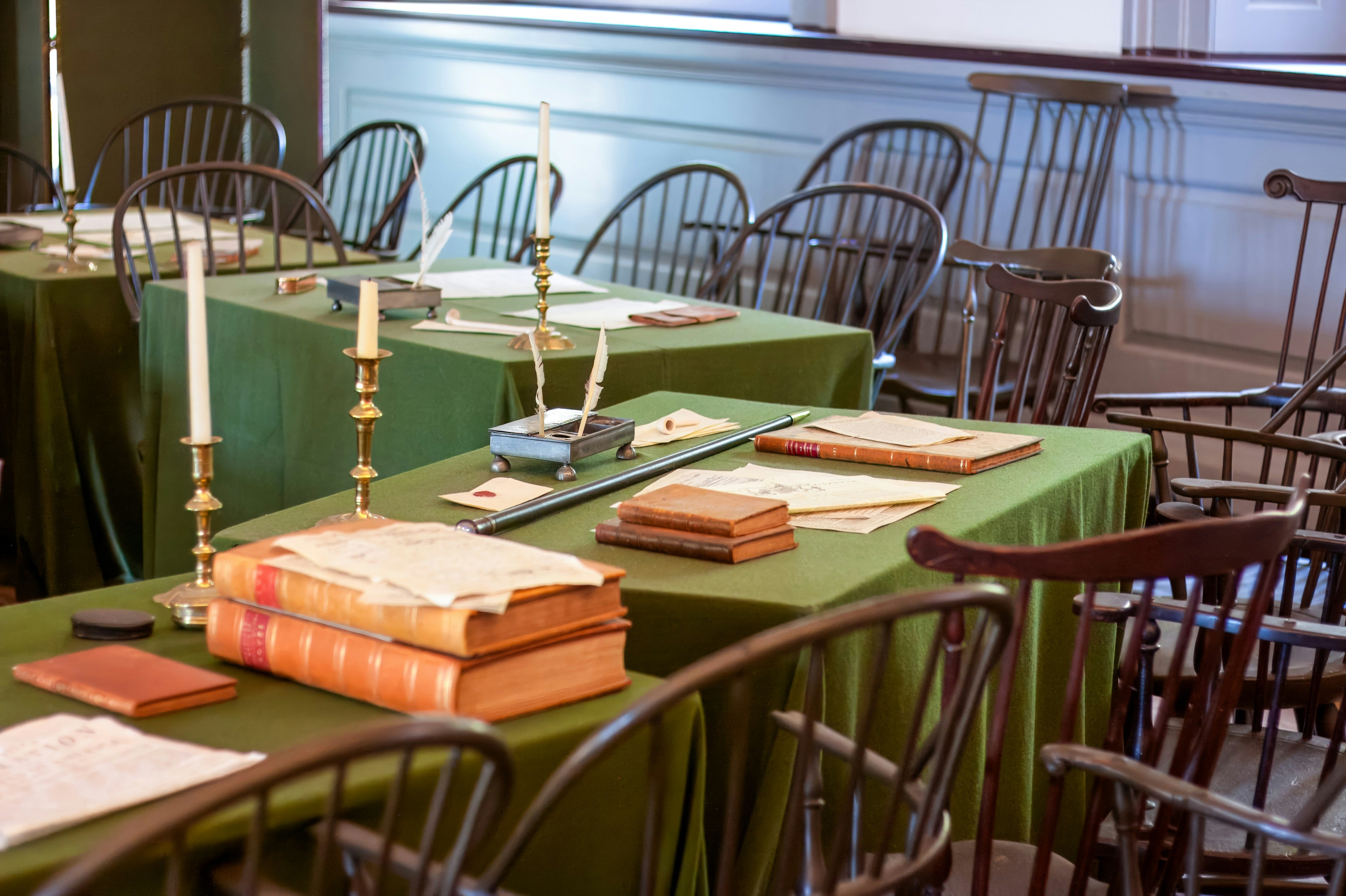
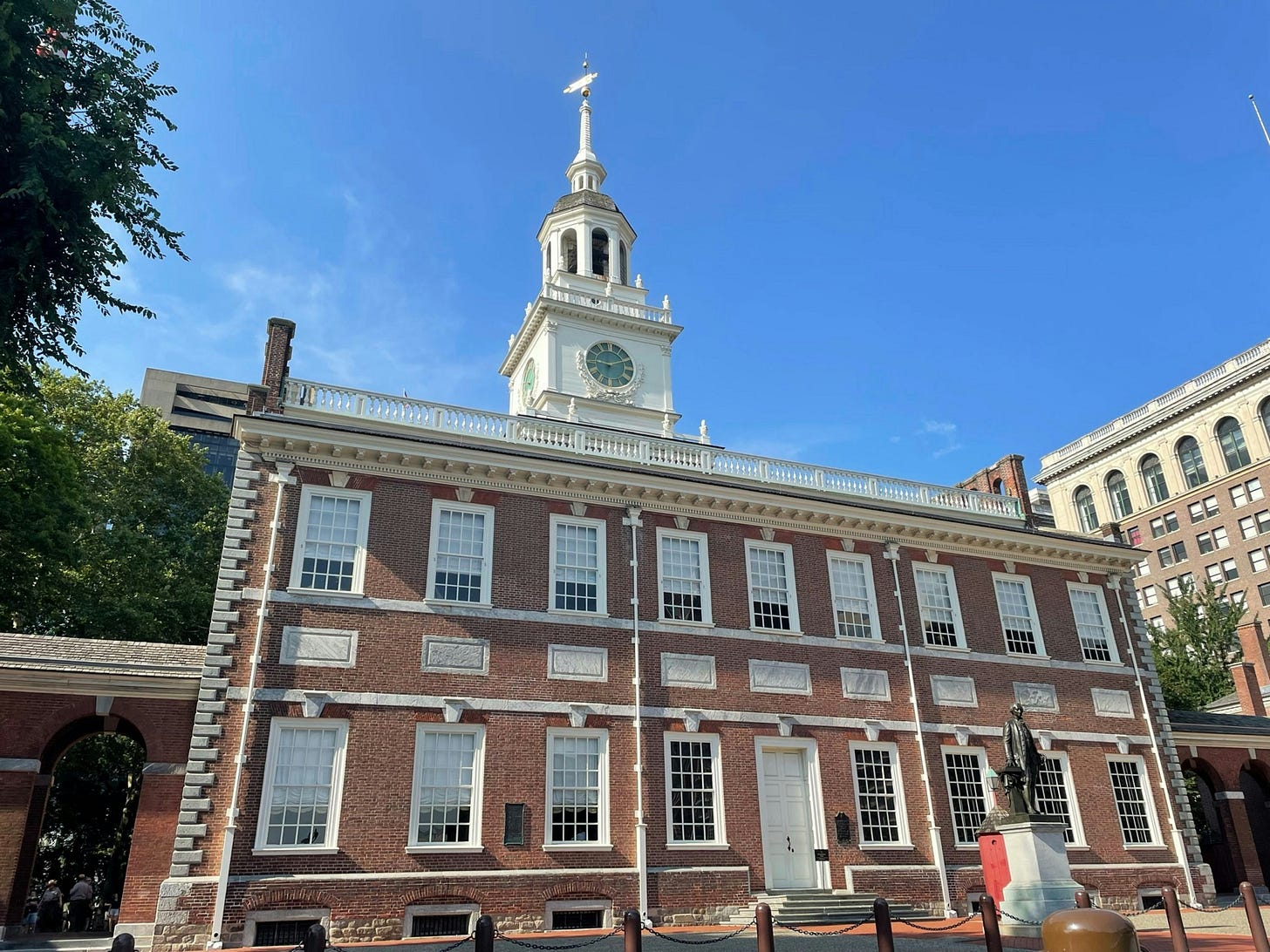
Most Americans this summer can picture the brutal heat of Philadelphia in the summer of 1776. July 1, 1776 was humid with highs well into the 80s, before July 2 when temperatures were cooler than the days around it, holding in the 70s. What most of us can’t imagine is wearing wool coats to a long meeting with no A/C as we sweat out the biggest decision of our lives. Can you even imagine? The windows of the Pennsylvania State House were kept shut against flies and eavesdroppers, and inside that airless chamber, fifty-six men were arguing about whether to commit treason.
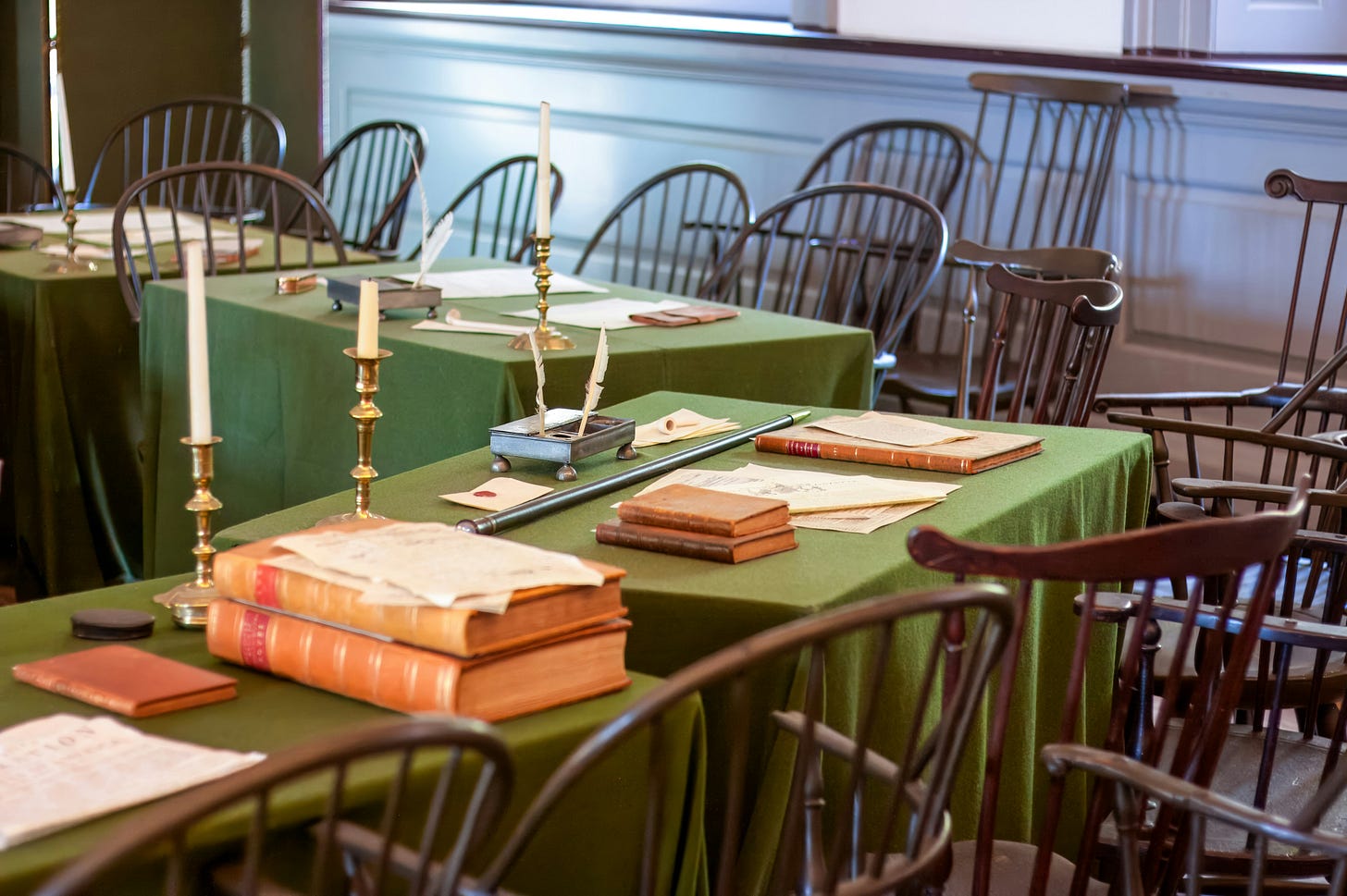
That is what independence was - legally. Not a celebration. A capital crime against the British Crown, and every man who signed his name to the document was signing a warrant for his own arrest and possible death should the effort fail. It was a room of lawyers, farmers, and merchants, badly divided, worried about their families, and genuinely unsure whether they were about to save their country (and lives) or end it.
John Adams believed that the vote for independence -- which actually happened on July 2nd, not the 4th — would be remembered forever. He wrote to his wife Abigail predicting future generations would mark the day with fireworks and parades from one end of the continent to the other. He got the sentiment right and the date wrong by two days, which is its own small lesson: even the people closest to history rarely predict the future with full accuracy while they’re standing inside it.
Adams was, by most accounts including his own, not the most likable man in that room. He was blunt, easily wounded, and quick to argue. But he spoke more than almost anyone else on the floor of Congress that summer, wearing down one skeptical colony after another. Pennsylvania did not want independence. New York’s delegation was instructed to abstain. Georgia and the Carolinas needed convincing that a rebellion led by New England wouldn’t get them slaughtered without support. None of them arrived in Philadelphia already agreeing with Adams. He talked them there.
Meanwhile George Washington’s army — the thing the Declaration would either legitimize or doom — was falling apart a hundred miles away. To make the odds of success worse, the fall and winter produced an army underfed, underequipped, and losing badly with a commander who wrote privately that he was not sure the cause could survive the season. The document being signed in Philadelphia was, in a very real sense, a bet on an army that was currently retreating.
And fifty years later, almost to the day, Thomas Jefferson and John Adams — the Declaration’s author and its most relentless advocate, men who had become bitter political rivals and only reconciled in old age through years of letters — died within hours of each other, on July 4th, 1826. This is the definition of unity that built the foundation of our government, and which is still essential today – unity is not agreement, it is mutual respect. Adams’s last words are said to have been about his old friend, not yet knowing Jefferson had died that same morning.
The Declaration of Independence was the ultimate demonstration of unity which the history of the world had never seen. Unity was the real foundation of democracy and freedom. Unity was never agreement. The men in that room did not see eye to eye — on independence itself, on what kind of country should follow, on each other.
Adams found Dickinson timid. Dickinson found Adams reckless. What held the room together wasn’t consensus. It was enough mutual respect to keep arguing in the same building instead of walking out of it, and eventually enough respect to sign the same document for the sake of the greater good.
The Fourth of July is not the story of a country that was always going to exist. It has succeeded, in large part, because the signers understood something about leadership, influence, and change that still holds up almost 250 years later.
Seven Keys to Leadership, Influence, and Change from the Birth of the United States:
1. Unity, not agreement, is the foundation of lasting teams.
Unity is not agreement – it is mutual respect. Many of the signers were bitter rivals – but they had enough mutual respect to stay focused on the same goal. The Declaration of Independence was the ultimate demonstration of unity which the history of the world had never seen. Unity was the real foundation of democracy and freedom.
Every leader accumulates rivals. No place is this more apparent than in politics on Capitol Hill, but what would surprise most people is that behind the scenes this foundation that the signers set in place still exists in Congress. Republicans and Democrats have to work together to get legislation passed, and this is often the result of relationships in developed behind closed doors. Members of Congress and staff have to work together and form partnerships, even friendships, across the aisle in order to get their priorities across the line. It is not uncommon to hear a staffer in one party say about a staffer in another party, “They’re great. I love working with them.” This is unity in action.
Unity is not everyone thinking alike. It’s everyone deciding the shared effort is worth staying in the room, even with people you didn’t choose and don’t fully agree with. Big change rarely survives on the strength of the idea alone. It survives on the list of people willing to stand behind it — not because they agree on everything, but because they respect each other enough to stand together anyway.
2. Build the coalition as soon as possible.
Independence did not pass because thirteen colonies agreed on principle. It passed because a small number of committed people spent months in private conversation, letter by letter and colony by colony, turning abstentions into yes votes.
Adams didn’t wait for unanimity of belief. He never got it, and he didn’t expect it. What he built instead was a working coalition of people who still disagreed about plenty, but who had decided the room mattered more than the disagreement.
Big change rarely survives on the strength of the idea alone. It survives on the list of people willing to stand behind it before the vote is called.
3. Timing decides more than logic.
The case for independence had existed for years before 1776. What changed was the moment. Thomas Paine’s pamphlet Common Sense, published that January, shifted public opinion at exactly the moment military events made reconciliation with Britain feel impossible rather than merely unwise. The same argument, made two years earlier, would have failed. Made in the summer of 1776, it carried a continent.
A good idea introduced at the wrong moment dies quietly. The same idea, reintroduced once the moment has caught up to it, changes history. Reading the room is essential.
4. Frame the ask in terms the room already cares about.
The Declaration does not open with grievances specific to Massachusetts or Virginia. It opens with a case built on principles every colony, whatever its private interests, could see itself inside — self-evident truths, unalienable rights, government by consent. Jefferson and the drafting committee were not writing to persuade themselves. They were writing to give every delegate in that room, and every colonist beyond it, a reason to see the cause as their own.
The ask that succeeds is rarely the one argued most passionately. It is the one framed most clearly in terms of what the other side already wants.
5. Say it plainly.
The Declaration runs a little over a thousand words. It does not hedge, apologize, or bury its central claim in throat-clearing. It states the grievance, states the principle, states the conclusion. Jefferson’s genius on the page was not ornamentation. It was clarity under pressure — the discipline to say the hard thing directly rather than let it soften across three extra paragraphs.
Decision-makers, in 1776 or now, are almost never short on information. They are short on time and patience for finding the point. The “ask” that arrives short and specific gets answered. The one that circles itself gets set aside.
6. What do you have to lose?
Fear is an incredible motivator – much more so than pleasure often. Life, liberty and the pursuit of happiness is great – but fear of death, slavery, and what they had left in England was the ultimate motivator. The final line of the Declaration pledges the signers’ lives, fortunes, and sacred honor — and it meant exactly that. These were not rhetorical stakes. Several signers lost property, position, and safety in the years that followed. Their names on that page were not an opinion. They were collateral.
Leaders who sacrifice for their teams gain a trust that becomes a wall of protection in the future. Sacrifice creates loyalty to your mission that is unmatched. The signers understood that the document’s power came directly from what it cost them to sign it.
7. Respect outlasts agreement
Adams and Jefferson spent the better part of two decades as bitter political rivals, one of the most well-known rivalries in American political history. They disagreed on the size and shape of government, on France, on nearly everything a President has to decide. And yet in their final years they rebuilt the friendship through letters, wrote to each other as old men reflecting on what they’d built together, and died on the same improbable day, half a century after the vote that bound their names together permanently.
Notice what that reconciliation was not. It was not Adams deciding Jefferson had been right all along, or Jefferson conceding the argument. Neither man changed his mind. What changed was that each came to respect what the other had risked and built, even while still disagreeing with him. That is unity— not sameness of opinion, but respect that survives the argument. Every leader accumulates rivals. Not ever leader hates them all.
None of this was obvious in 1776. The people who built the foundation of American government were guessing, arguing, and betting everything on outcomes they could not see. What they left behind wasn’t just a country. It was a working demonstration of how change gets made — not through certainty, but through unity, coalitions, timing, framing, clarity, risk, and respect applied by people who kept going.
Want to read more about this? I highly recommend David McCullough’s 1776 (happens to be on a steep discount this weekend).
Happy 250th birthday, America!

Originally published in How Power Moves on Substack: https://howpowermoves.substack.com/p/america-at-250-what-the-founders