Why the most generous impulse in the world often misses the solution
...And what changes when you go upstream instead.

The Goat Problem
Why the most generous impulse in the world often misses the actual solution — and what changes when you go upstream instead.
It’s Christmas in July, and Hallmark’s already deep into its holiday lineup which makes this an oddly fitting moment to revisit a story about a very different kind of Christmas catalog.
President John F. Kennedy laid the cornerstone of the Rayburn House Office Building in the spring of 1962, and almost immediately the objections began. It would take ten more years to finish, largely because the outcry about the expense had captured the public imagination. At one point, the media labeled it “The Ten Year Pyramid” — a monument to government inefficiency and overreach.
Maybe that’s why the Rayburn cafeteria still feels the way it does: long, narrow, cramped ceilings, fluorescent lighting. Eating there feels a bit like being back in a high school gym. Food service winds down by early afternoon, as if the building itself gets tired and heads home before the rest of us.
It was at one of those cafeteria tables, on an ordinary afternoon that I learned something that changed how I understood advocacy, change, and the relationship between the two.
Our group had settled in near the windows — a mix of lobbyists and field experts, people who had spent enough time in Congressional offices to know that compassion by itself changes very little. We’d logged years inside rooms most Americans don’t know exist, briefing lawmakers whose budgets exceeded the GDP of small nations, watching program portfolios worth hundreds of millions of dollars evaporate because of a single overlooked clause buried in an appropriations bill. We understood how a few sentences of legislative language could open or close the financial futures of entire communities.
What changes outcomes is preparation, relationships, timing, and the ability to translate a human story into legislative language without losing the humanity in the translation. Around that table, that knowledge was not theoretical.
A colleague made an off-handed comment the way an experienced contractor might point out a crack in a foundation wall — flatly, without drama, but with the frustration of someone who has been watching a preventable problem go unaddressed for too long.
“So many people buy goats for children in need from Christmas catalogs,” he said, “but I wish more people knew that government laws could make it so we didn’t even need to buy a goat for some of these children in the first place. The problem is that government advocacy produces no adrenaline rush.”

He told us about a nonprofit that had started with a mission built around government advocacy, only to quickly discover that donors didn’t want to fund lobbying efforts — even for a good cause. Donors wanted something tangible - like a goat. So the organization shifted focus and became the well-known name we all recognized that day.
He wasn’t dismissing the goat. He was pointing at the structural issue sitting upstream from it — the enormous, unglamorous, largely invisible work that produces the very problem the goat is meant to solve. The scale of need depicted in those charity catalogs is usually the outcome of specific decisions: laws that benefit industries at the expense of small farmers, trade agreements that distort local markets, corruption that siphons development funds before they reach the villages that need them, instability that creates vacuums exploitation rushes in to fill. These aren’t forces of nature. They’re the downstream consequences of choices made upstream, in rooms like the one I was sitting in.
The goat is a response to a symptom. Effective advocacy goes upstream to the source — and the distance between the visible symptom and the invisible system that generates it is where the most significant change almost always happens.
The corporate world is full of goats, too. A company hires an expensive consultant to fix a culture problem without asking what leadership decisions created the culture in the first place. A manufacturer adds inspection steps without asking why the defects are occurring. A company invests in reactive crisis management instead of building the relationships that could have shaped the regulation before it became a crisis. We’re extraordinarily good at responding to symptoms — bandaids are quick, easy, and they stop the bleeding. We’re considerably less practiced at going upstream to fix the system that produces the problem in the first place.
Empathy and compassion are wonderful. The goat is cute. The children get a gift, and we feel good about giving back — whether that giving happens in December or, thanks to Christmas in July, six months early. But how do you change the system that caused the crisis in the first place? That question is harder. The answer is slower. The process can be more controversial. The downstream response to urgent need is good and necessary — but so is the upstream, more permanent solution: not just how to stop a crisis, but how to change the system that caused it and prevent it from happening again. Structural, lasting change arrives in the form of a law passed, a procurement standard changed, a market incentive restructured — and it reverberates for decades, in every season.
So what is government advocacy, actually?
It’s not a press conference. It’s not a march with good signage, or a media-driven outrage cycle that trends on Tuesday and is forgotten by Friday.
Government advocacy is the slow, deliberative process by which individuals, organizations, or groups seek to influence public policy, legislation, or government decisions in ways that align with their interests or values. It can look like lobbying elected officials, testifying at public hearings, organizing grassroots campaigns, submitting public comments, or engaging directly with government agencies — on issues ranging from healthcare to education to energy to child protection.
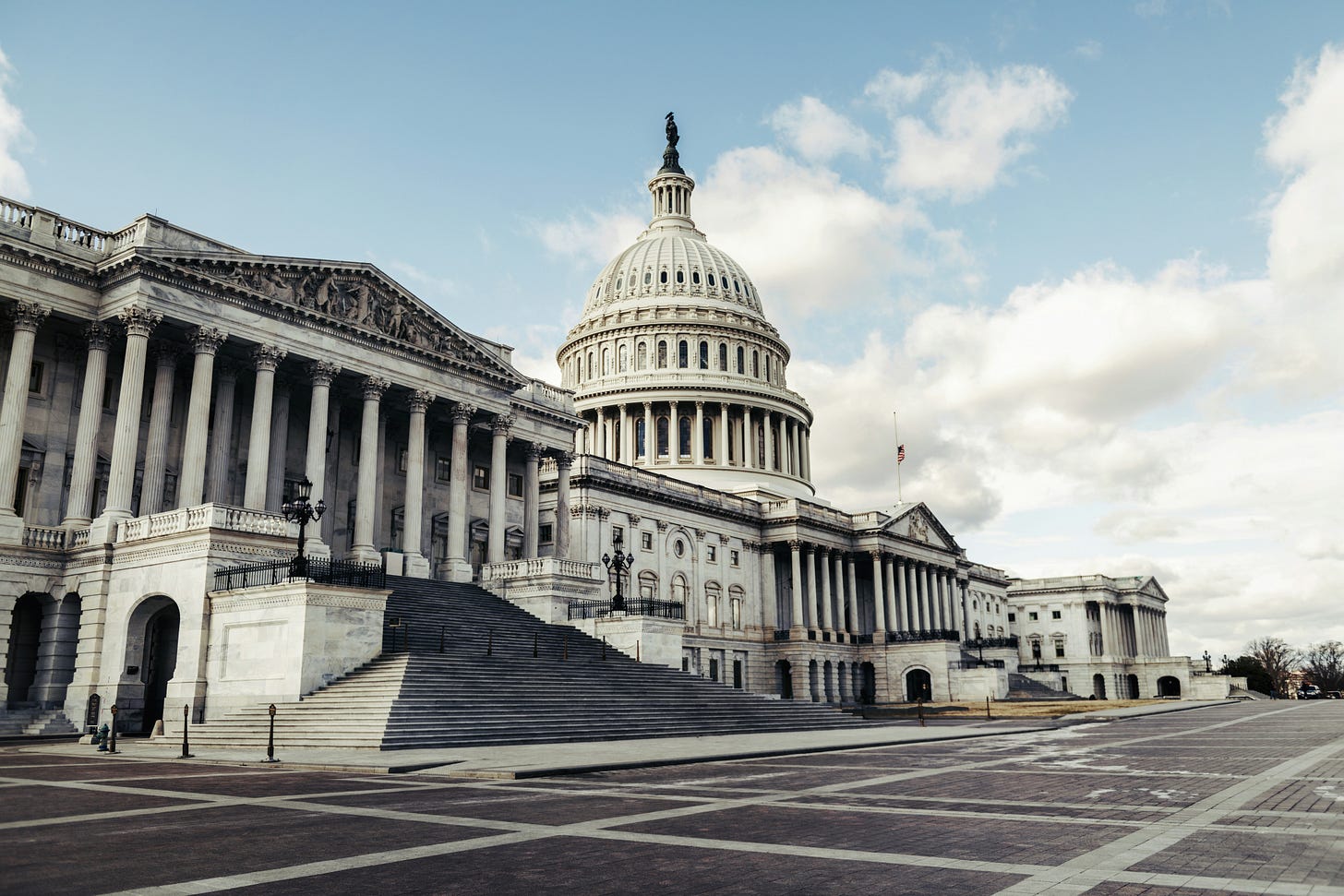
In reality, it’s often a meeting with a Congressional staffer in their mid-twenties who controls access to an elected official in their sixties who controls access to a committee with jurisdiction over the language in question. It’s a policy memo drafted at midnight and revised at dawn. It’s a coalition of organizations with vastly different worldviews who have agreed, for the purposes of one specific bill, to send letters on the same day to the same offices with the same ask. It’s a legislative request refined through thirty conversations until it’s finally ready to become statutory language.
No cute goats. No glossy Christmas brochures. And barely visible.
Advocacy rarely produces a quick dopamine hit. What it delivers instead — in ways genuinely difficult to see in the moment — is structural change that is exponentially more consequential. That’s the distinction my colleague was drawing at that cafeteria table: not between charity and indifference, but between downstream relief and upstream solutions. Between the visible, immediate response to suffering, and the invisible, incremental, disciplined work of changing — with real permanence — the conditions that produce the suffering in the first place.
Anna
My friend Anna was in town that day on a brief sabbatical from the Middle East. She wore sandals to our White House meeting because she hadn’t anticipated the dress code, and her size-ten feet wouldn’t fit into any of my shoes. She was new to Washington, new to the grammar of Congressional offices and State Department briefings — and because of that, she was a breath of fresh air. People listened intently from the moment she opened her mouth.
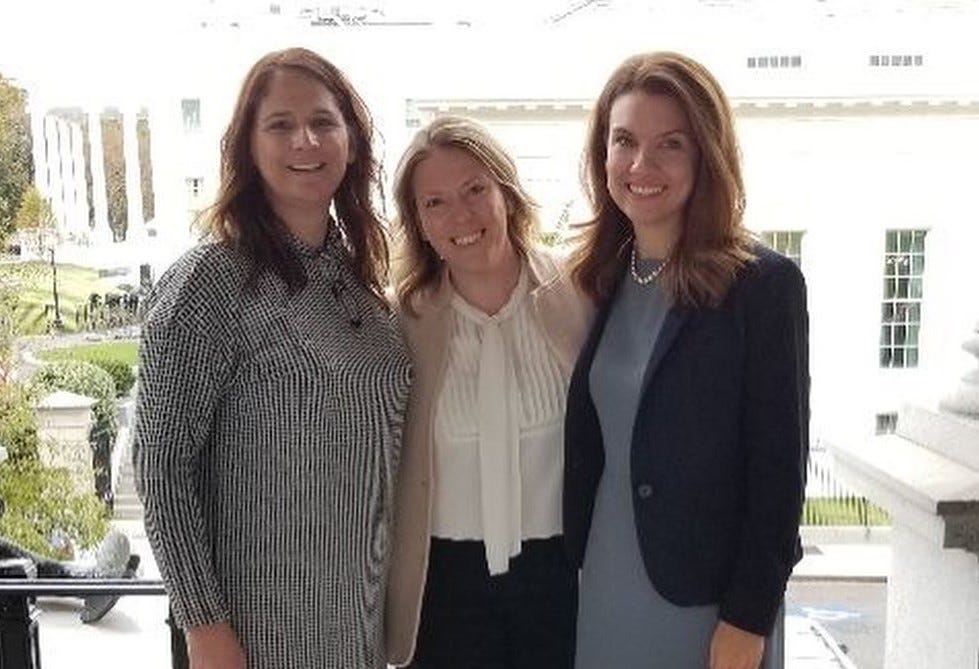
“I would have bought the goat,” she told us. “I have bought goats. But that was before this week — before I sat in these rooms and saw how policy decisions are actually made. Once you see the impact that one law can make, you realize you can stop trauma before it starts. This process can make entire categories of suffering obsolete.”
That’s what happens when someone who genuinely cares about a problem encounters, for the first time, how power actually moves to solve problems at scale. It isn’t a comfortable experience. It requires giving up the clean narrative of direct, individual impact in exchange for something more nuanced — and much slower. There’s rarely just one hero in the story. Government advocacy means having conversations that begin cordially and end with no visible progress, and then, months later, produce a single amended sentence in legislation that will never be photographed or celebrated — but that reverberates through supply chains, court systems, and family outcomes for decades.
So this Christmas in July, as the Hallmark movies start looping, it’s worth asking the upstream question a season ahead of schedule: what’s one problem you would like to solve by addressing the roots?
Originally published in How Power Moves on Substack: https://howpowermoves.substack.com/p/the-goat-and-the-greater-good